
Often in our lives, we experience great transitions. Our children grow up and leave home. We loose our jobs, or experience an unplanned change in career direction. Our physical bodies change, and we can no longer do the things we used to do.
Often, these times of change can bring great anguish. This suffering happens when we closely identify with some role or perception of ourselves. We can not separate “who we are” from “what we do”.
As my children are in or heading to college, I think about this a lot these days.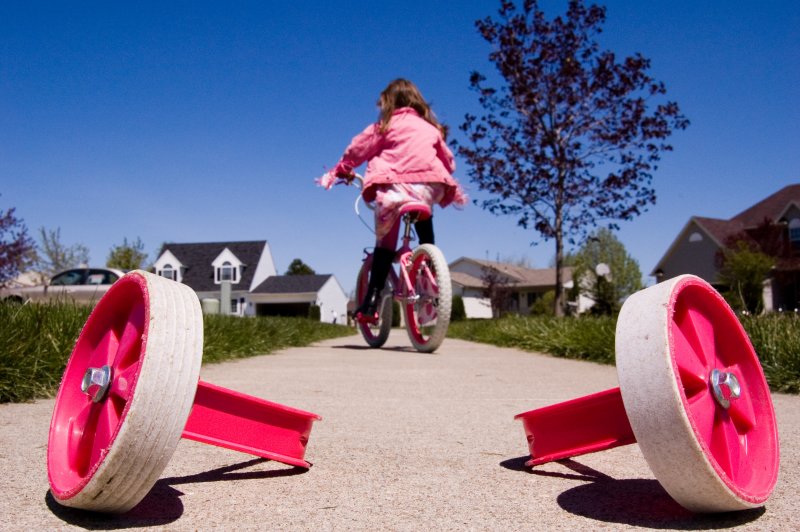
For example, if my self-identify is as a father caring for my children, when my children leave I will experience great suffering. When my identity or my idea of fatherhood is wrapped up in the idea of caring for children, the loss of that role is, in essence, a loss of self; and the suffering is a fear of, or resistance to that loss. Of course it is sad when our children finally grow up and leave home; we love our children and love to spend time with them. However, when they move on, it is a natural progression of life. I am still the person I was, not really changed at all, my role is just changing, as it always does. Will I worry? Yes. Will I miss them? Yes, of course. Will I spend my days in anguish over not having children to care for? Hopefully not. Instead I will smile with pride.
When our self-identity is closely connected with a social circle and/or role, anything that changes those aspects of our lives will immediately be a threat to our identity, and therefore unleash great fear and anguish.
Another example is the loss of a job, or the loss of social standing or popularity, or having, then loosing, great physical prowess. There is so much energy expended to maintain these types of standings, and so much suffering when they are lost, sometimes to the point of suicide.
Really, when these things happen, the essence of who we are has not changed, we are just so attached to some artificial image of ourselves that we can’t bear to perceive ourselves as “not” that. Of course, we never really “were” that, it was all just our own fabrication.
When our self-identity transcends outer appearances, self-prescribed roles, or the social circles or standings with which we associate ourselves, we become free. We are no longer bound to roles or perceptions which can limit us, cause us to create great energy to maintain, and create great upset in us when they are lost; instead, we may freely experience and, when necessary, transition through and experience anew many different phases of our lives. This way, we welcome each new transition with curiosity, with courage, as we open ourselves to experiencing a new dimension of this wonderful life.
 An Instrument of Your Peace